
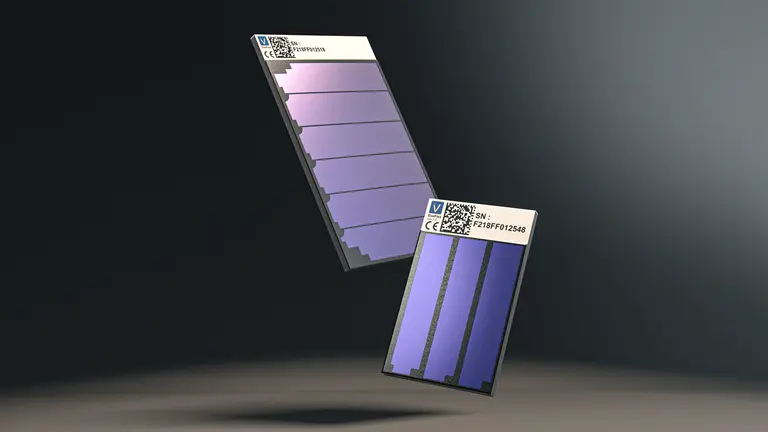
Tracking thousands of tools, parts and racks with battery-powered tags means thousands of batteries to replace. Battery-free Bluetooth Low Energy (BLE) tags run on ambient light, so they can be deployed at scale with no maintenance.
In today’s fast-paced industrial environments, efficient inventory management and asset tracking are crucial for maintaining productivity and reducing operational downtime.
Traditional methods of tracking equipment and inventory, such as manual barcode scanning or RFID, often require significant human effort and lack real-time visibility. However, with the advent of flexible Bluetooth Low Energy (BLE) tags, industries can now automate inventory processes and enhance asset localization seamlessly within production facilities.
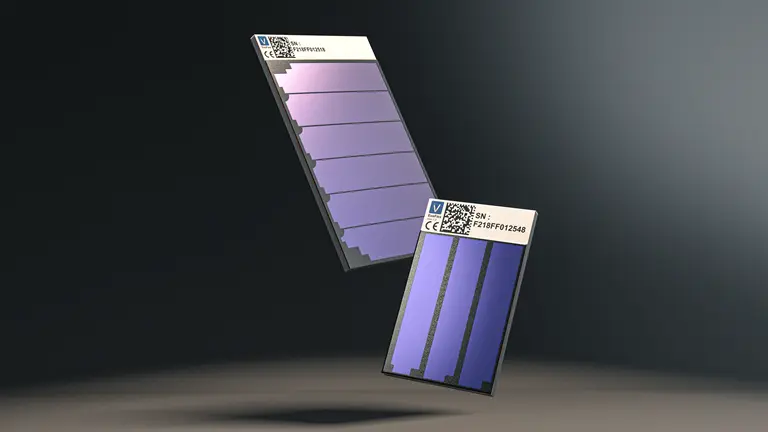
BLE technology provides real-time asset tracking by enabling automated communication between BLE-enabled tags and fixed or mobile scanners. These tags can be attached to a wide range of assets, including tools, machinery, and raw materials, providing instant visibility into their location and status. By leveraging BLE tags, industries can:
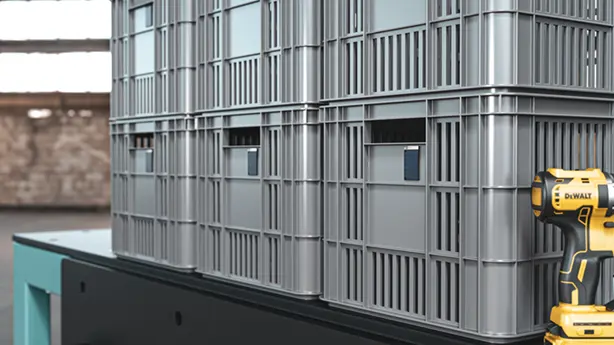
One of the standout advantages of BLE tags is their ability to provide precise location tracking within industrial facilities. Unlike traditional RFID or barcode systems that require line-of-sight scanning, BLE tags continuously broadcast their location, allowing:
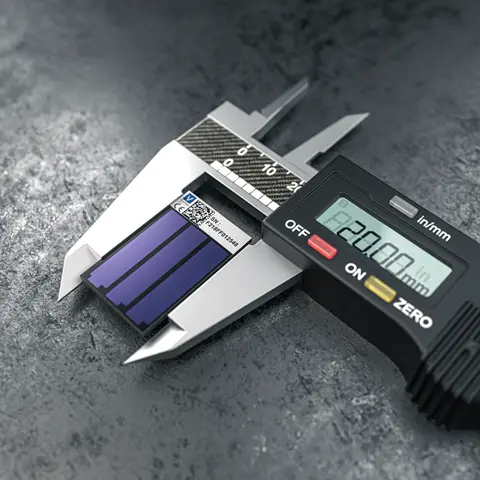
Another key advantage of these BLE tags is their compact and lightweight form factor. With dimensions of just 3 cm x 2 cm x 0.2 cm (1.18 in x 0.79 in x 0.08 in), they can be discreetly attached to a wide range of assets without adding bulk or interfering with operations. Their miniaturized design allows:
One of the major pain points in deploying thousands of tracking tags across an industrial environment is the need for battery replacement. With next-generation flexible BLE tags, industries can eliminate the burden of frequent maintenance, as these tags don’t require a battery change. This breakthrough provides:
A key innovation behind these BLE tags is their energy harvesting capability, powered by an integrated photovoltaic film. This enables the tags to function with minimal external power sources, offering:
This advancement ensures that BLE tags remain operational in challenging industrial environments, where consistent lighting is not always guaranteed.
Flexible BLE tags are proving invaluable in numerous industries, including:
As industries continue to evolve towards fully automated and data-driven environments, the adoption of flexible BLE tags will be a critical enabler for efficiency and cost savings. By eliminating the need for battery replacement, automating inventory tracking, and facilitating seamless asset localization, BLE technology is redefining industrial asset management.
For companies looking to improve inventory accuracy, reduce losses, and optimize production workflows, investing in BLE-based tracking solutions is no longer an option—it’s a necessity.
A photovoltaic film harvests ambient light, natural or artificial, and stores it to power the BLE radio. No battery needs to be replaced.
Once charged, the ivBeacon EosFlex keeps working for up to about three weeks in complete darkness, and recharges under very low light.
RFID tags are only read when they pass near a reader. BLE tags broadcast continuously, so gateways or a smartphone can locate them at any time.
Tools, parts, racks, trolleys, work-in-progress and any equipment indoors. For assets that leave the site, a GPS tracker is used.
Ask us for a demo of the ivBeacon EosFlex and the inVirtus Cloud platform.
Contact usBLE indoor tracking